04 · Identity / Photography
How we look through a lens.
Photography is the single most important visual signature we have. Cinematic, editorial photography of a world that does not exist, but somehow feels real. Bright, optimistic, retro-futurist, and patient. The reference is not sci-fi art. It is a 35mm film still from a future the 1960s wished for.
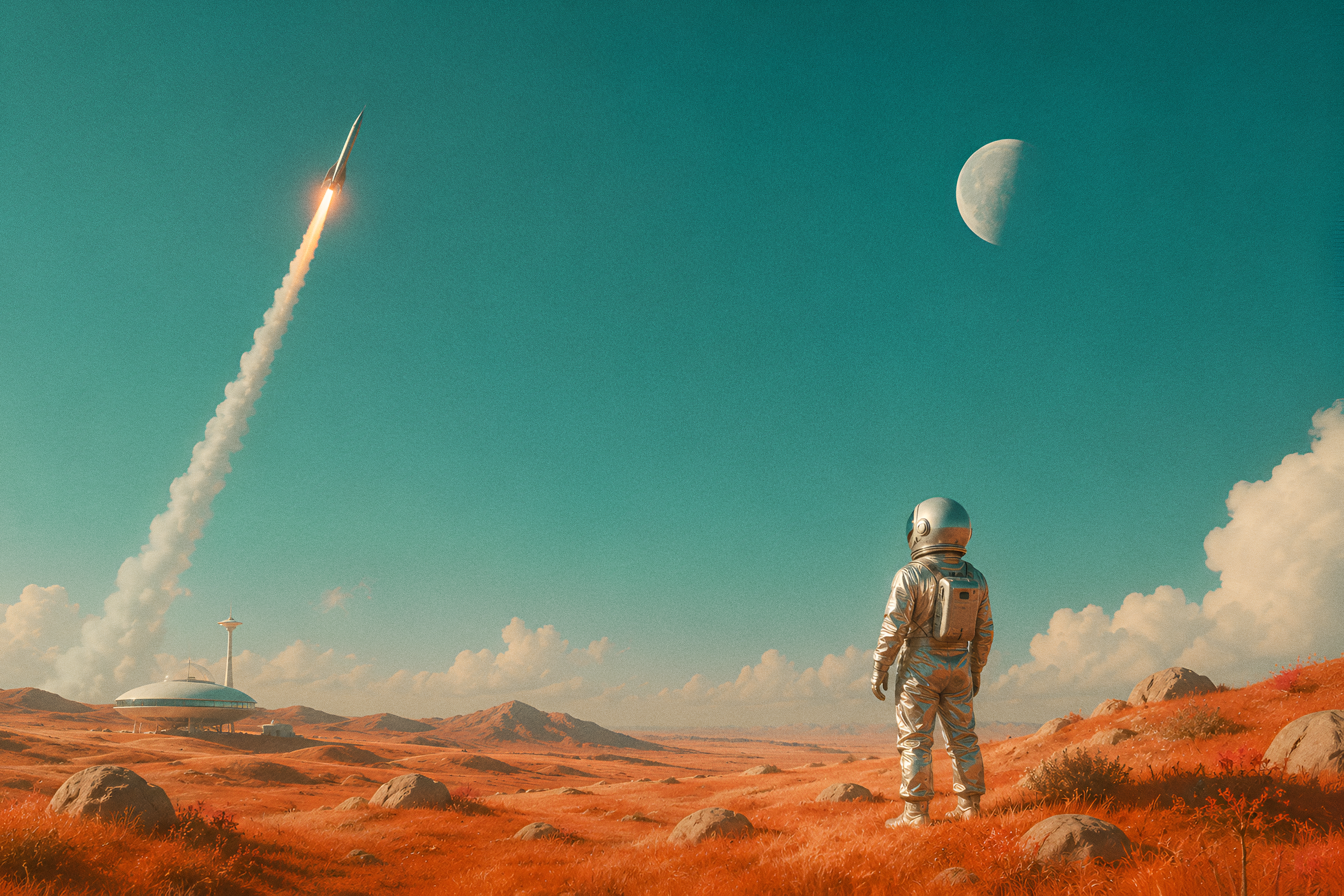
The look · Watching a launch
Composed, not generated.
Photographic realism, always. 35mm Kodak film feel. Visible grain. Soft diffusion. Lowered clarity. Natural lens falloff. Volumetric light. The image should feel art-directed, patient, and expensive. Not rendered, not concept art, not stock sci-fi.
The benchmark
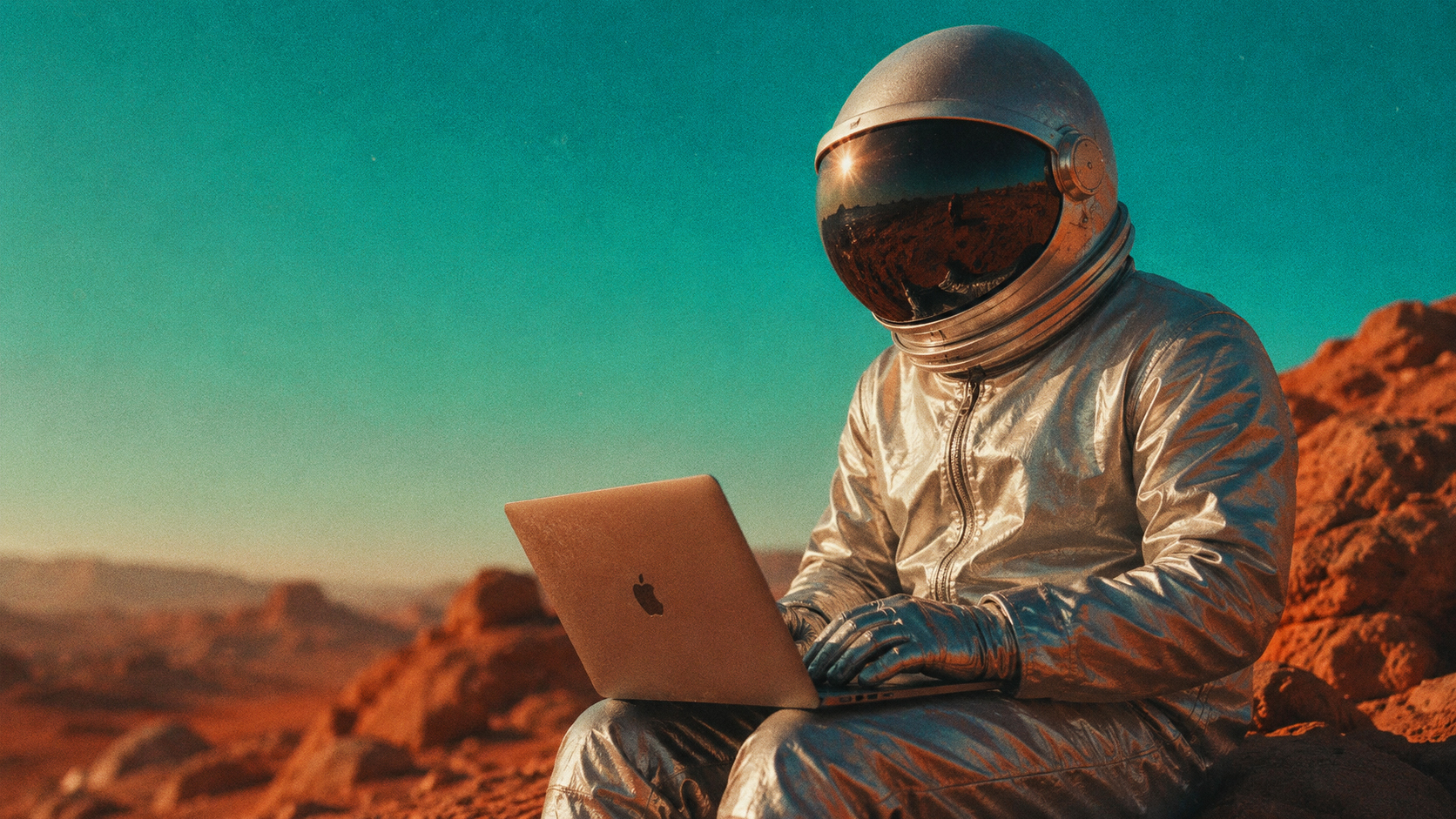
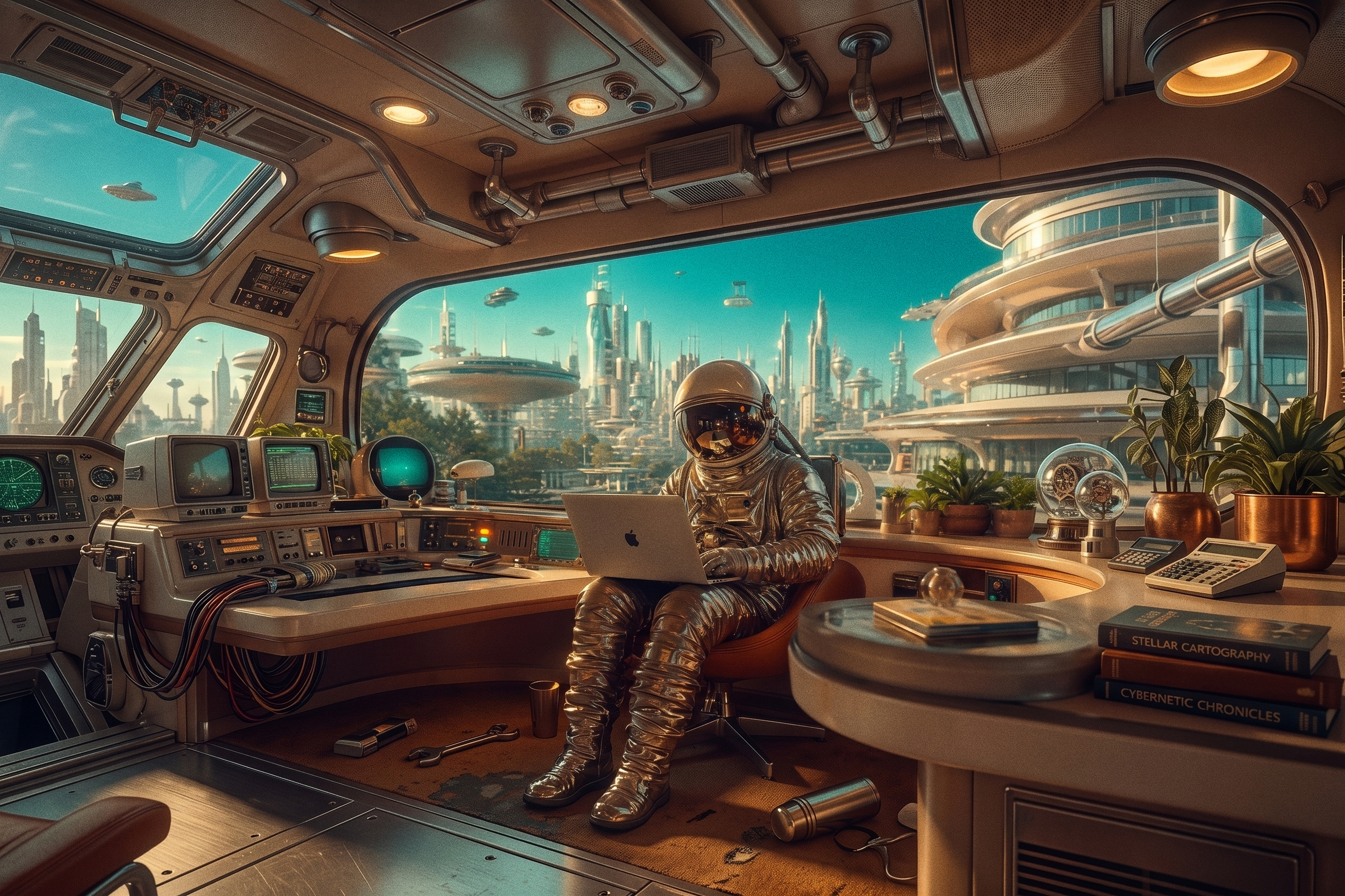
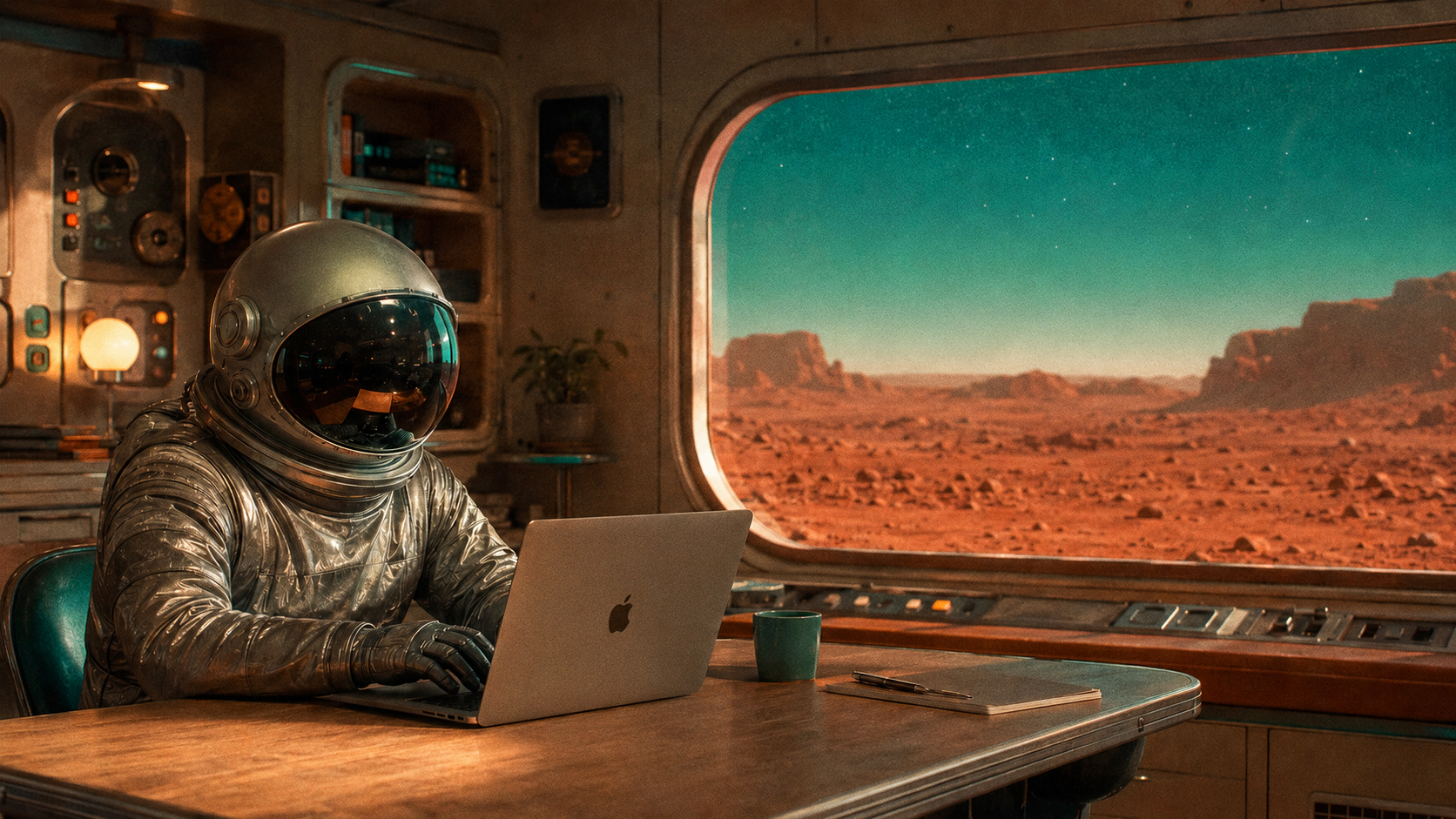
When in doubt, hold the work next to this.One astronaut, at work. Soft light. Calm composition. Room to breathe. If a new image doesn't share the patience and stillness of this one, it isn't on-brand yet.
Visual priorities
The difference between a photo and a render.Photographic realism
Looks captured, not generated.
35mm Kodak feel
Color science of warm film stock.
Visible grain
Quiet, organic noise. Not sharp.
Soft diffusion
Light bloom, lowered clarity.
Lens falloff
Edges quiet. Center rewards.
Gentle haze
Atmosphere reads, not just air.
Volumetric light
Light has shape and direction.
One dominant idea
A single read. Anything else is clutter.
Larger-than-life scale
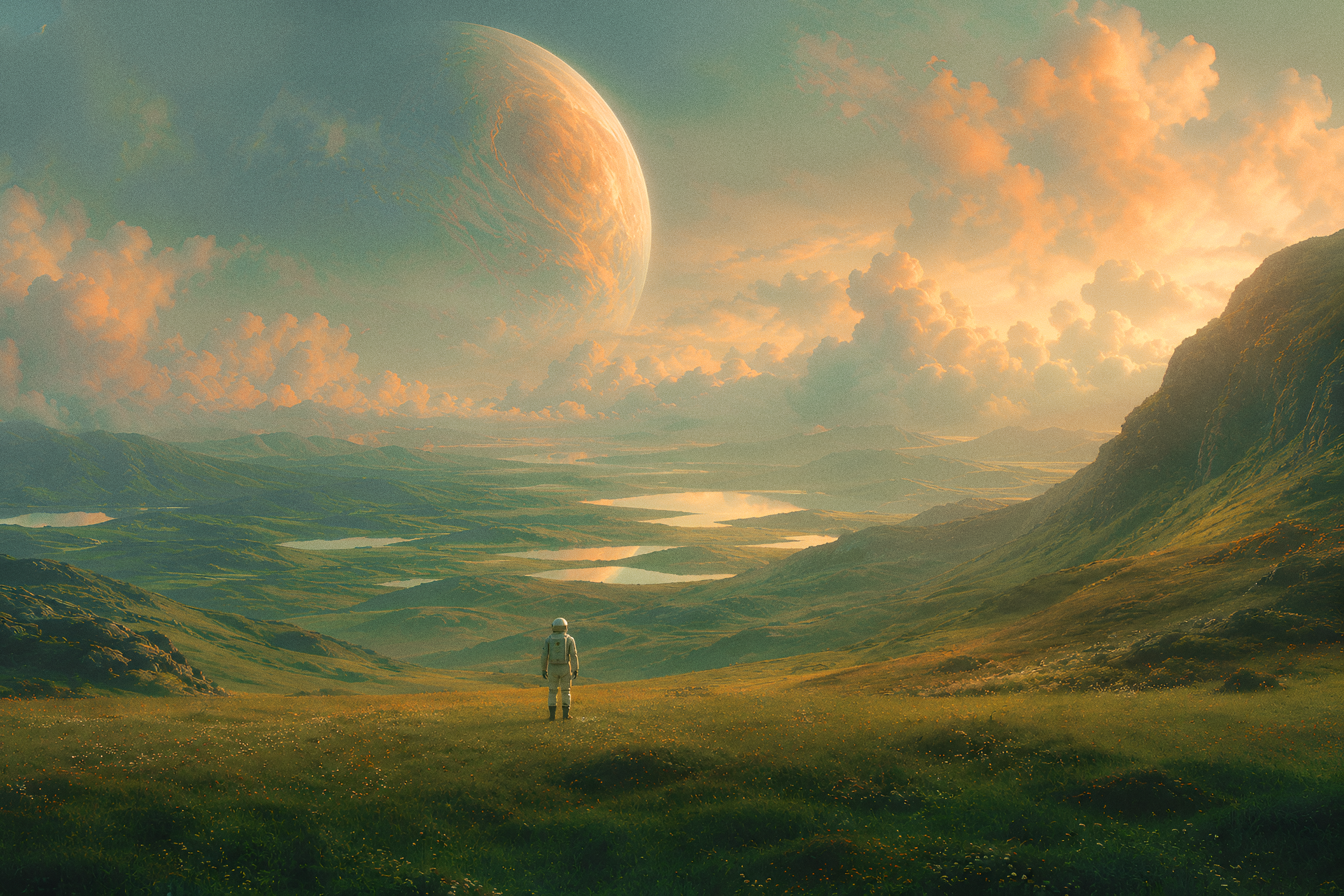
Subject small against a big world.
Emotional stillness
Quiet, patient. Never frantic.
Composition
Fewer ideas, more negative space, implied story.01
Centered or rule-of-thirds, nothing fancy
Pick one. Don't combine. The composition should be readable in half a second.
02
Reserve negative space for text
If the image will carry a headline, compose with that real estate already cleared. Sky, wall, floor, distance. These are the canvases.
03
Wide-angle worldbuilding
Pull back. Let the world be the subject. Subjects are often small against larger landscapes.
04
One emotional read per image
Not "calm and busy." Not "wonder and chaos." One read. The rest of the image supports it.
05
Background supports, never competes
If the eye doesn't know where to land first, the background is doing too much.
06
Use depth of field on purpose
Soft foreground or background to direct the read. Avoid everything in focus everywhere.
07
Imply the story, don't explain it
A figure walking away tells more than a figure mid-action. Trust the viewer to fill in the next frame.
Color language
Bright orange and teal. The world is luminous, not moody.Teal beats pale blue. Bright, radiant, saturated, but tasteful. Some scenes earn their own grading. Even when the palette shifts, the image must still feel like Planetary Talent, not a different brand entirely.
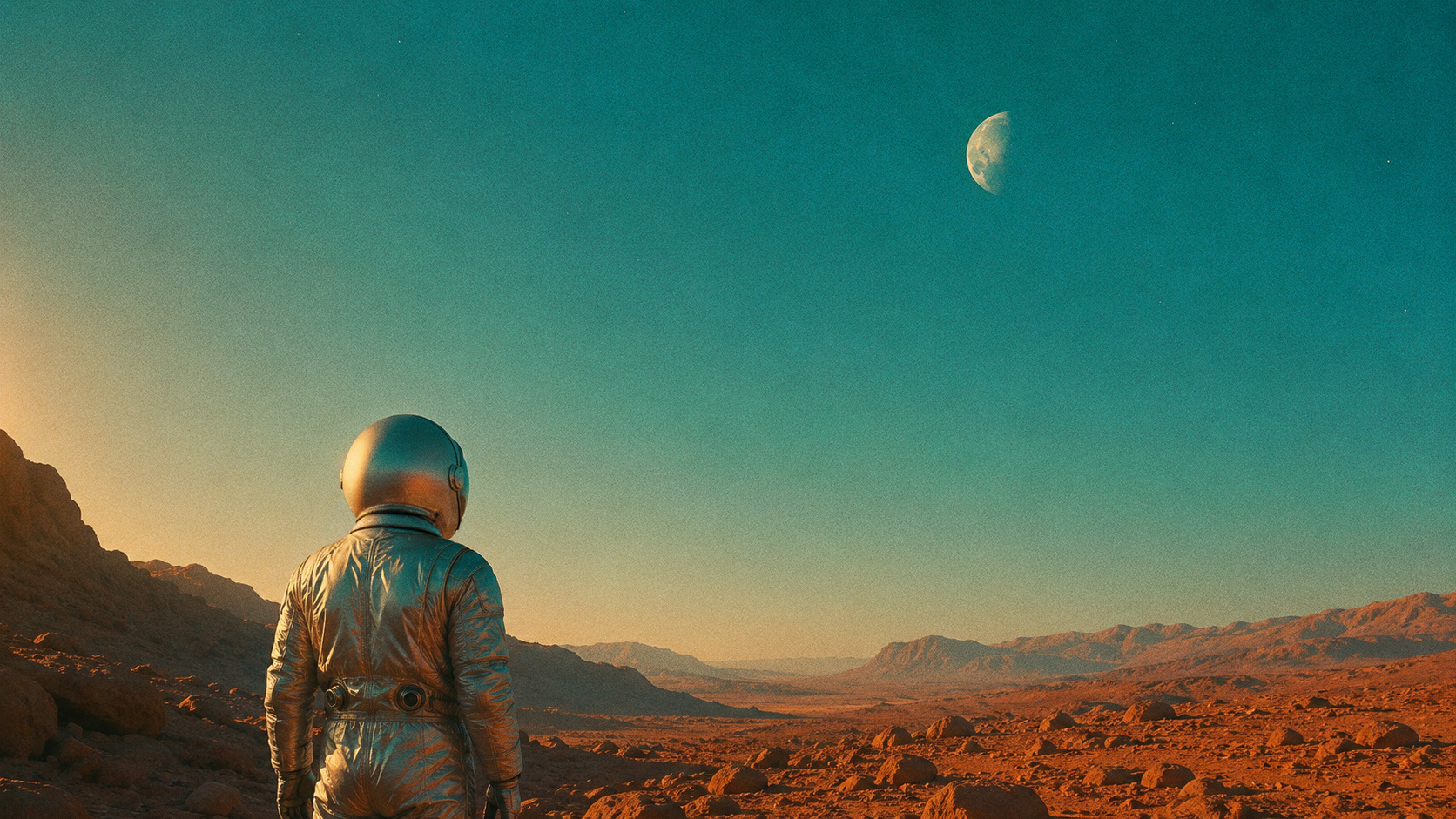
Mars
Red-orange terrain, deep teal sky.
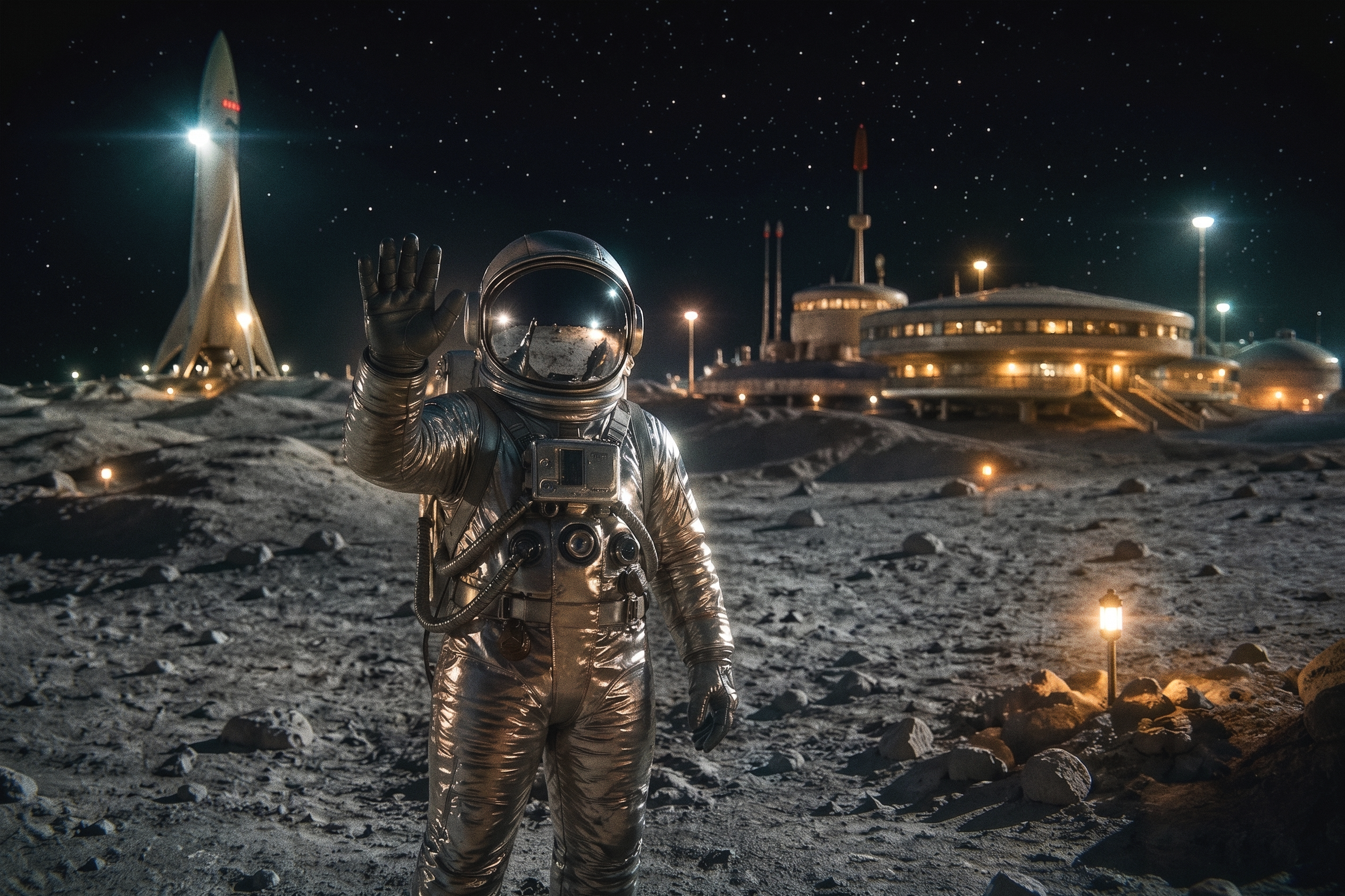
Moon nightlife
Black sky, stars, neon, bright artificial light.
Tropical dream
Warm greens and pinks, soft botanical atmosphere.
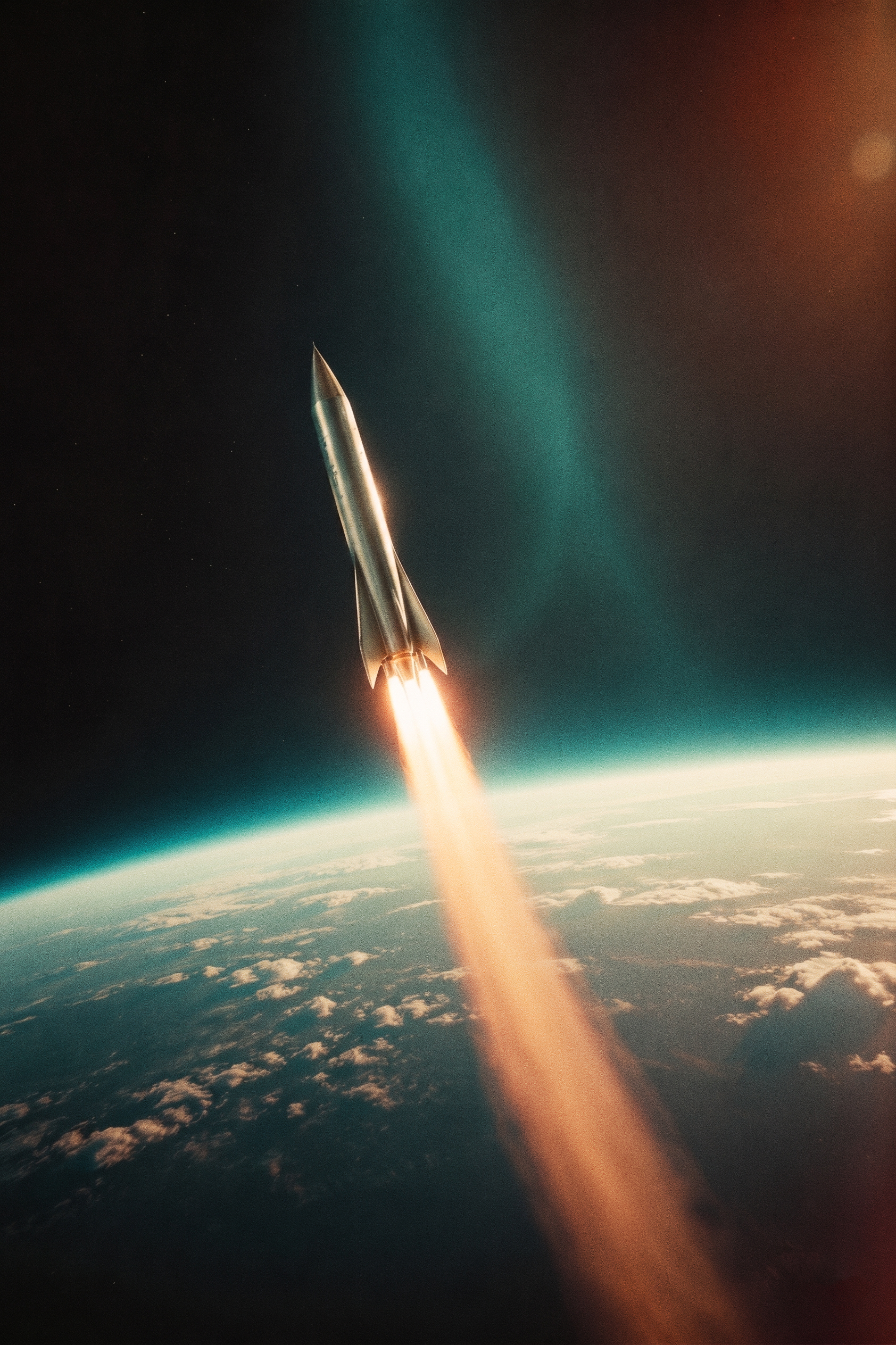
Deep space
Black dominant. Controlled pools of teal-blue and orange.
Lighting
Every image needs a clear, visible light source.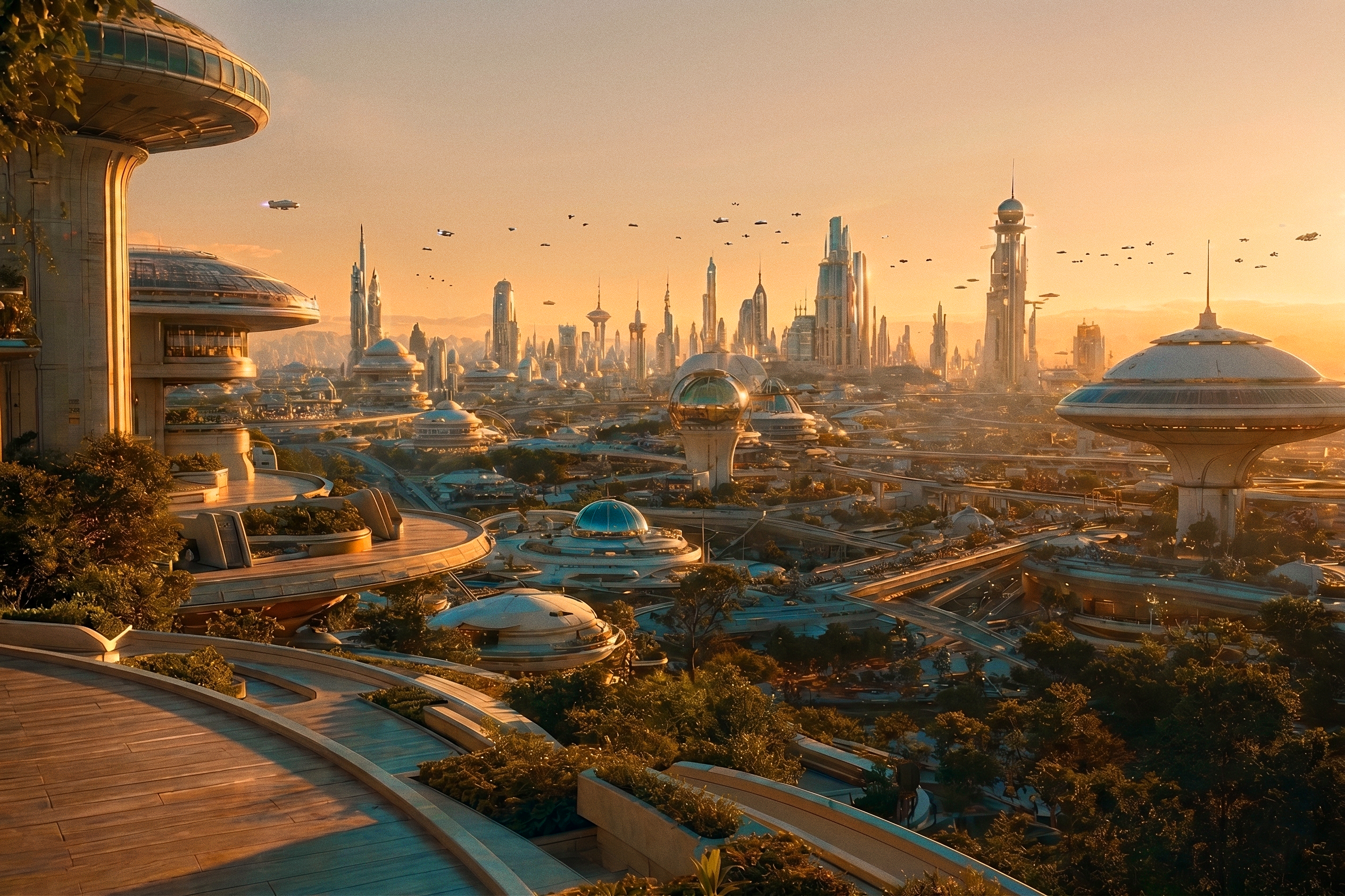
L · 01 · Default for Planetary City
Golden-hour warmth
Long shadows, warm ambient glow, low haze. The Earth-side hero look.
L · 02 · Daily-life scenes
Bright luminous daytime
Generous, even exposure. Optimistic, public, calm. Most lifestyle shots live here.
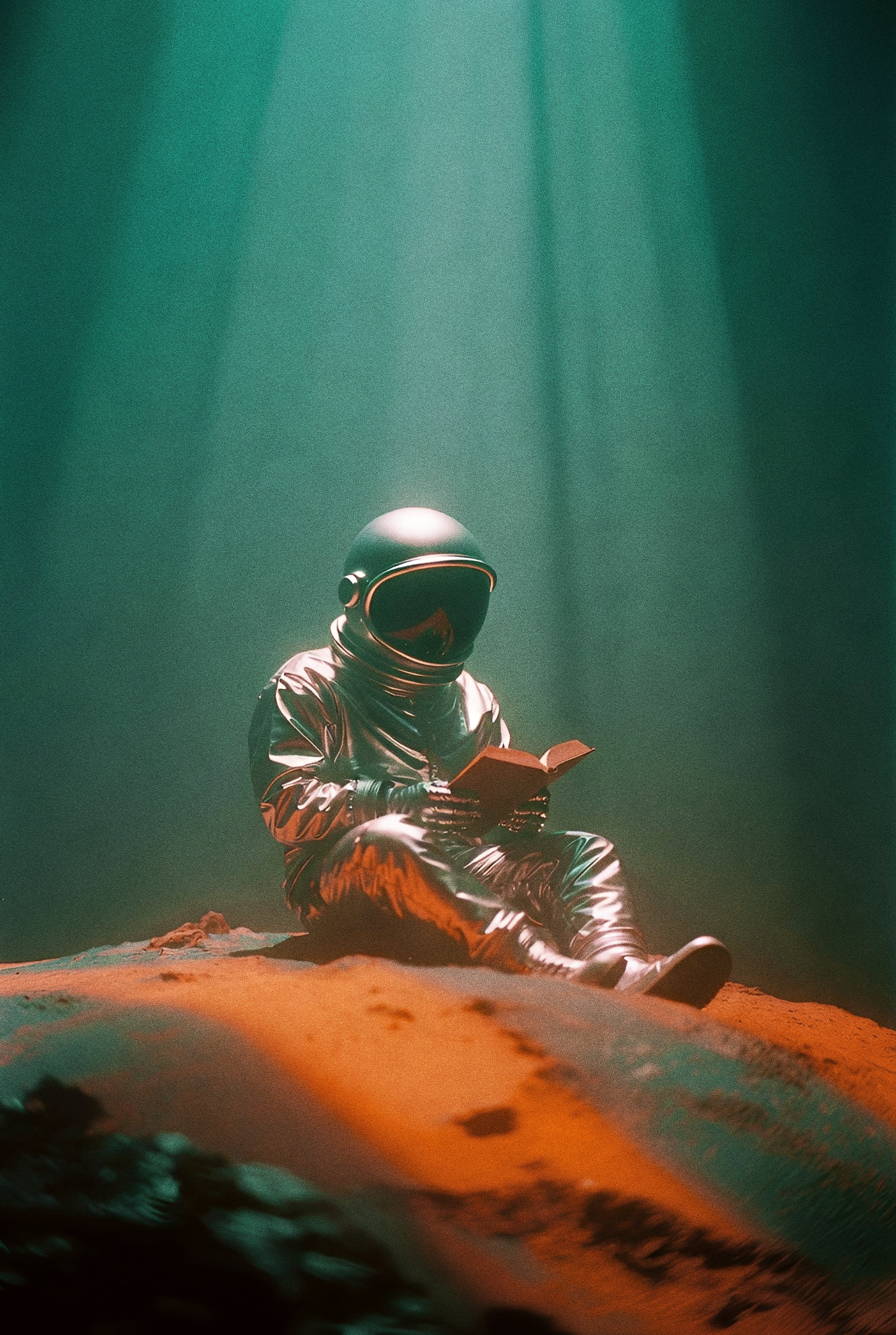
L · 03 · Reflective work
Soft morning light
Diffused, low-contrast, contemplative. For thinking, reading, mission-prep imagery.
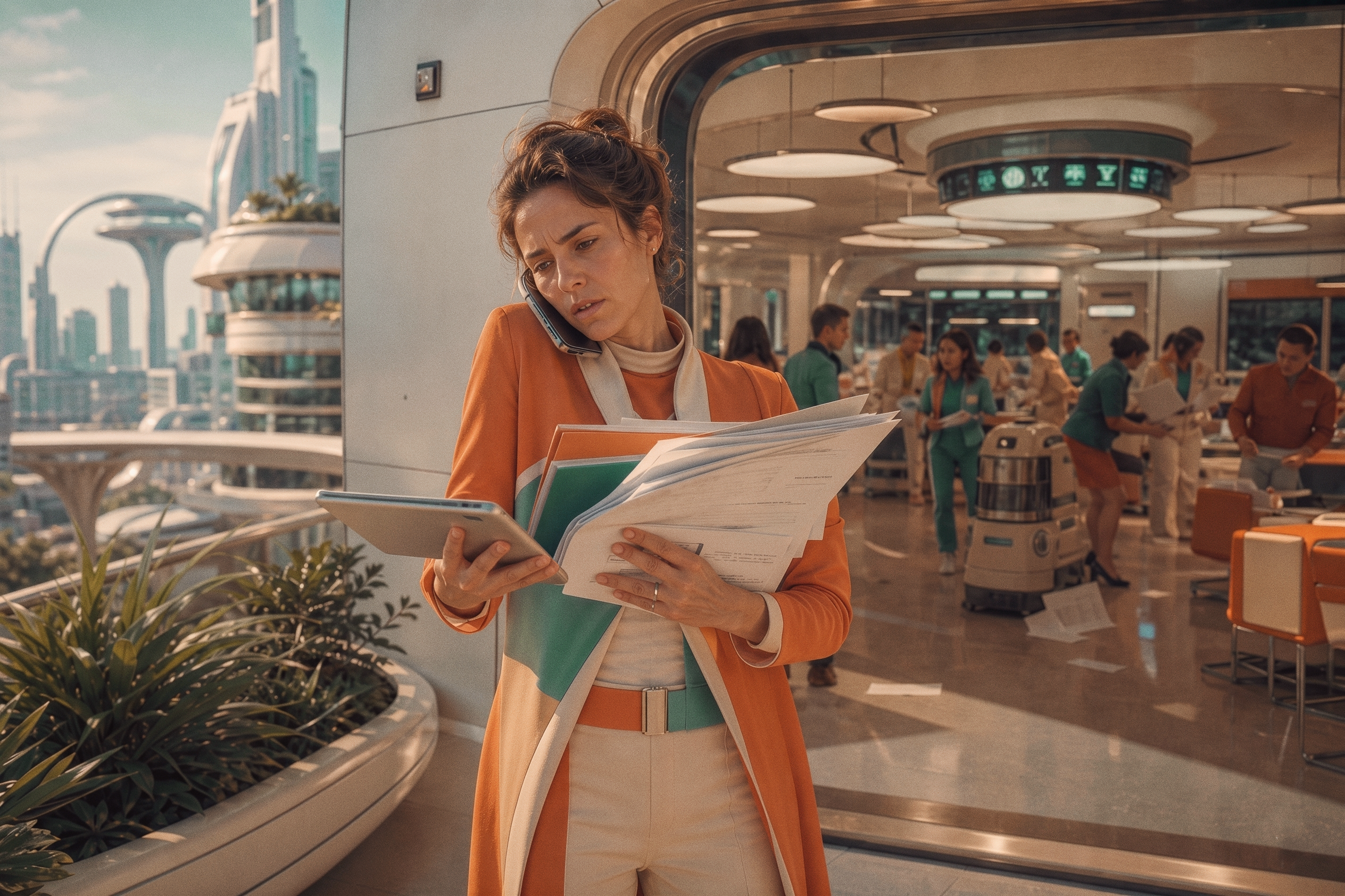
L · 04 · Late-night founders
Practical glows, cool interiors
Lamps, screens, warm pools against blue ambience. Pressure shown with dignity.
Texture and material
Tactile, photographic, worn-in. Nothing clinically sharp.AlwaysOn-brand materials
- Brushed aluminum and polished silver
- Creamy Bakelite-like plastics
- Warm stone or sandstone
- Clean glass, painted metal with light wear
- Soft greenery integrated into architecture
- Rounded mid-century industrial forms
NeverOff-brand materials
- Plastic-looking spacesuits
- Sterile Apple-store minimalism
- Glossy sci-fi chrome overload
- Ultra-crisp game-engine surfaces
- Synthetic CGI sheen on faces or fabrics
- Anything that looks rendered, not captured
Character canon
Humans are the emotional center. Always human-first.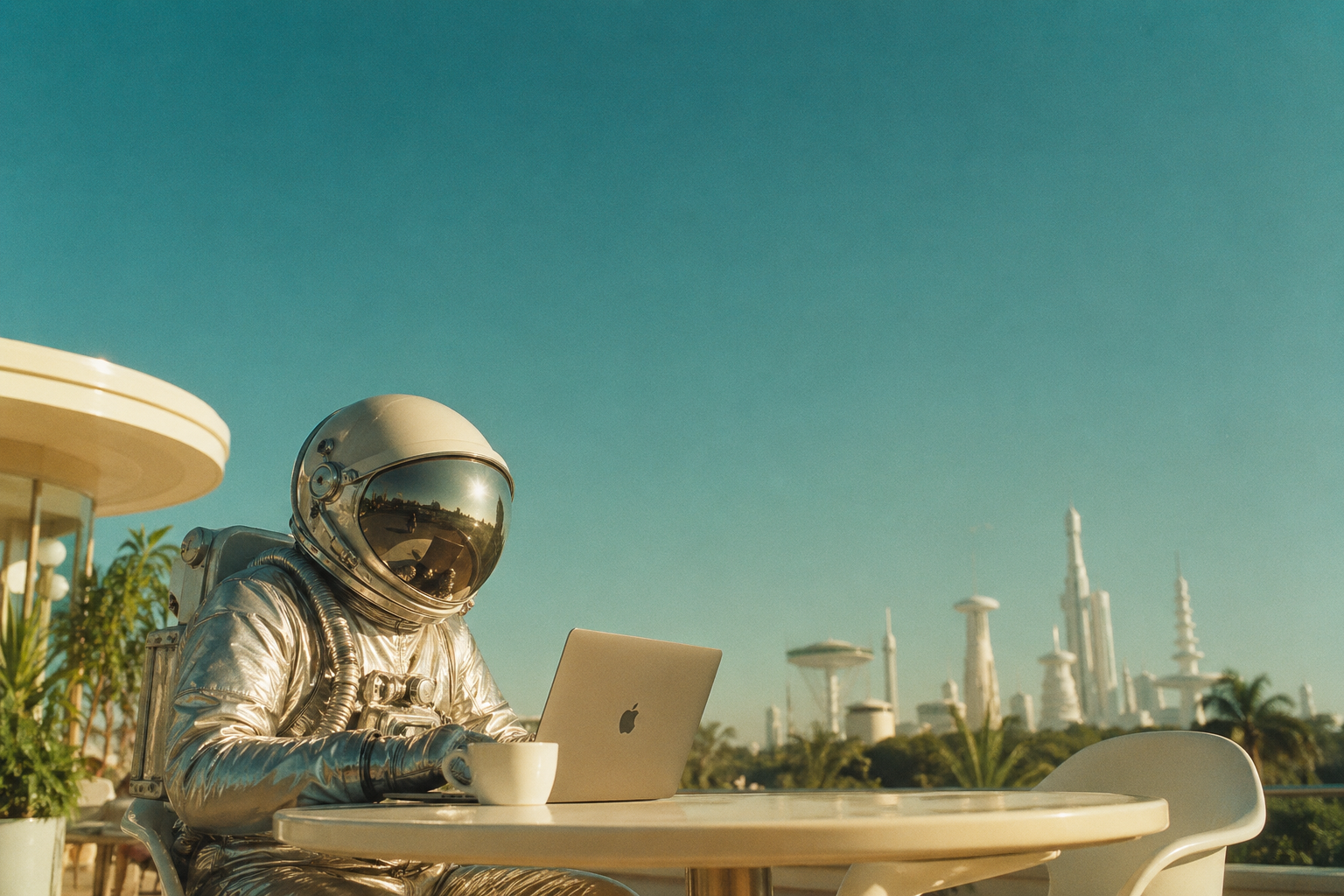
C · 01 · The metaphor
Astronauts
Reflective silver retro-style suits by default. Bulky, practical, believable. Helmets usually on, visors reflective. They are how we picture capable human talent: courage, mission-fit, meaningful work.
Silver suitsNo patchesVisors reflective
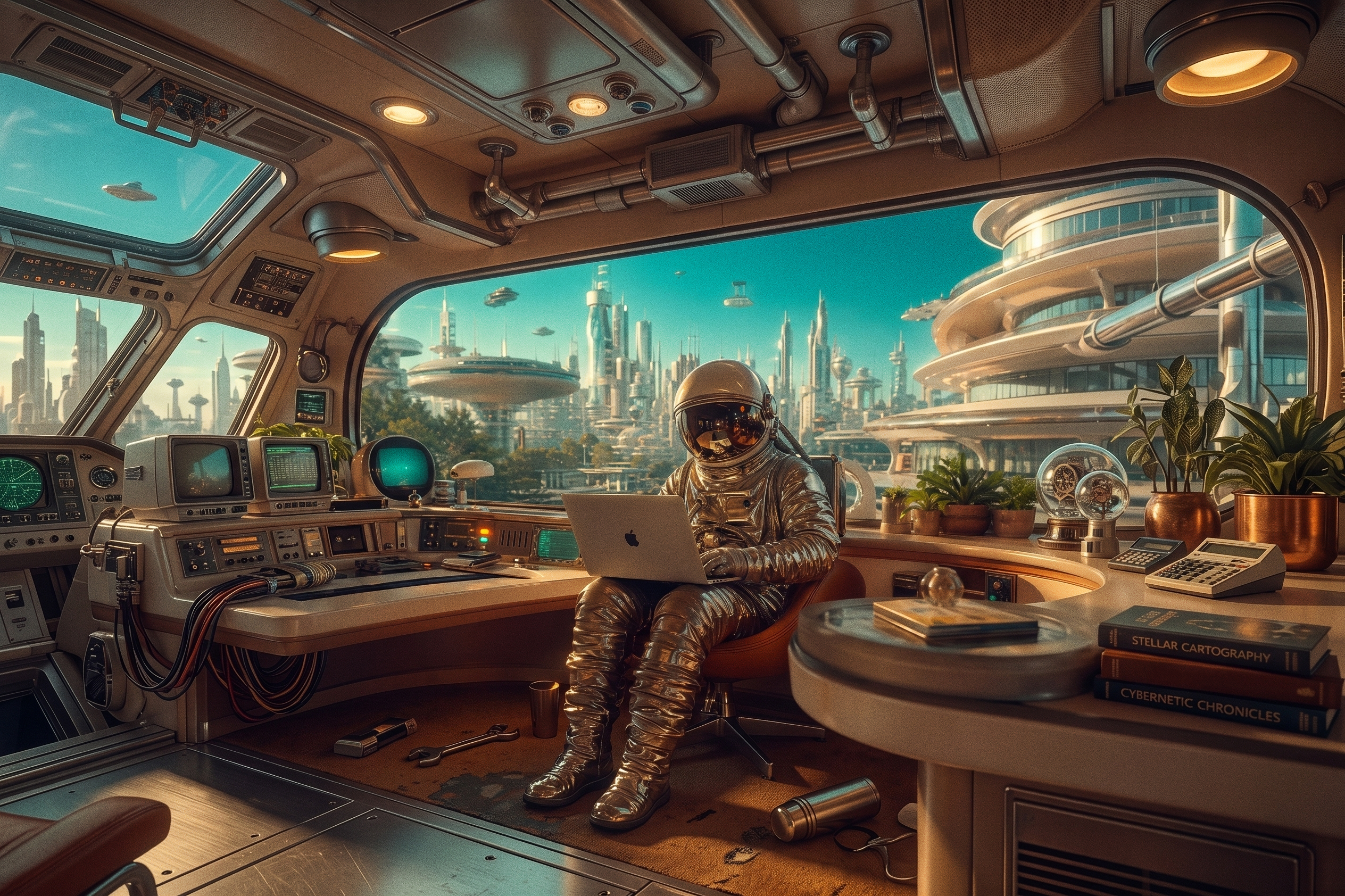
C · 02 · Civilians
Non-astronaut humans
No helmets or goggles. Colorful retro-futurist clothing in orange, teal, yellow, white, gray. Tailored mid-century-future silhouettes. Citizens, founders, designers, workers, builders.
TailoredMid-centuryColor-confident
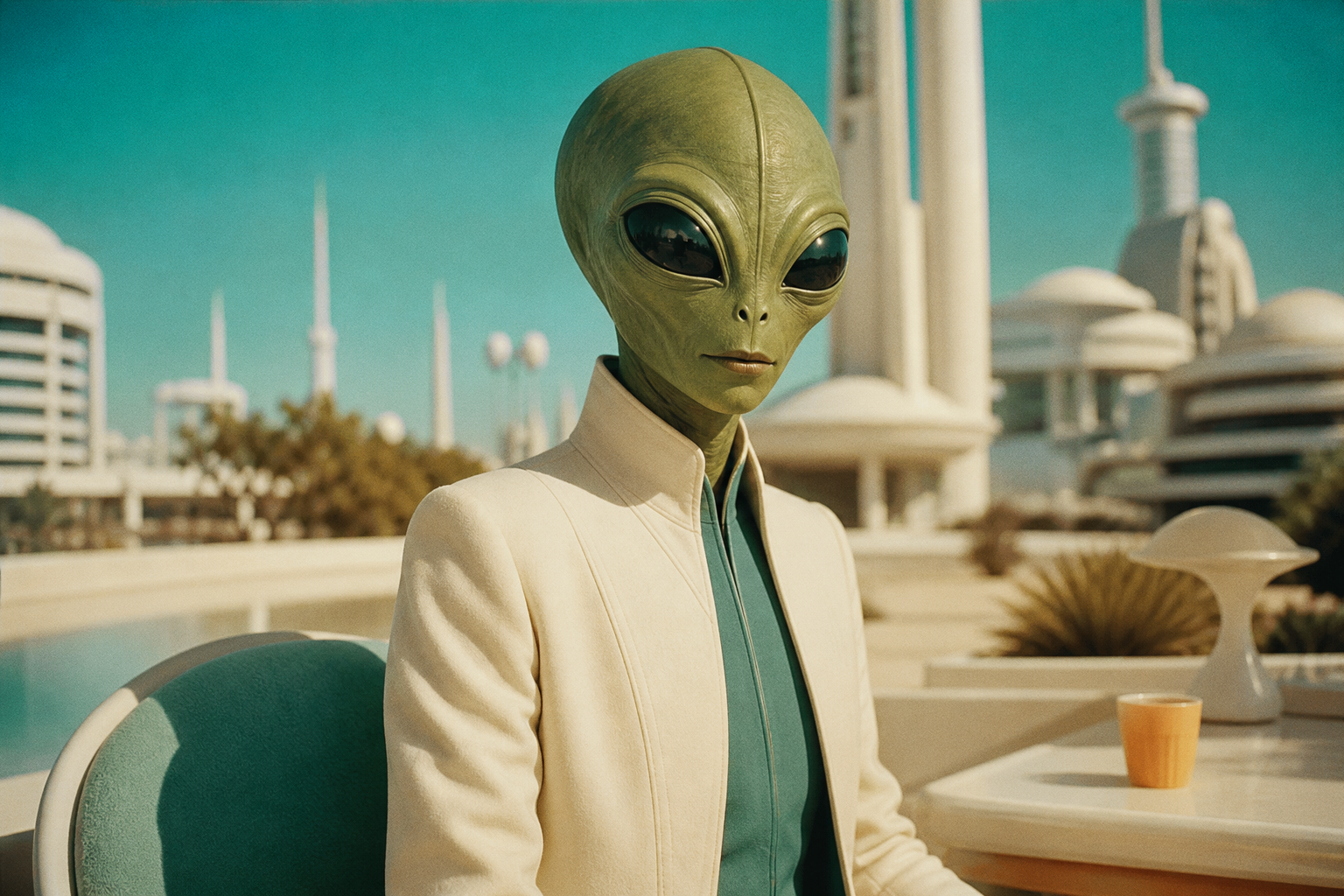
C · 03 · Citizens
Aliens
Retro humanoid. Green skin, large black eyes. Dressed like humans. Peaceful, real, integrated into society. Never horror, never threat.
Green skinBig black eyesHumanoid
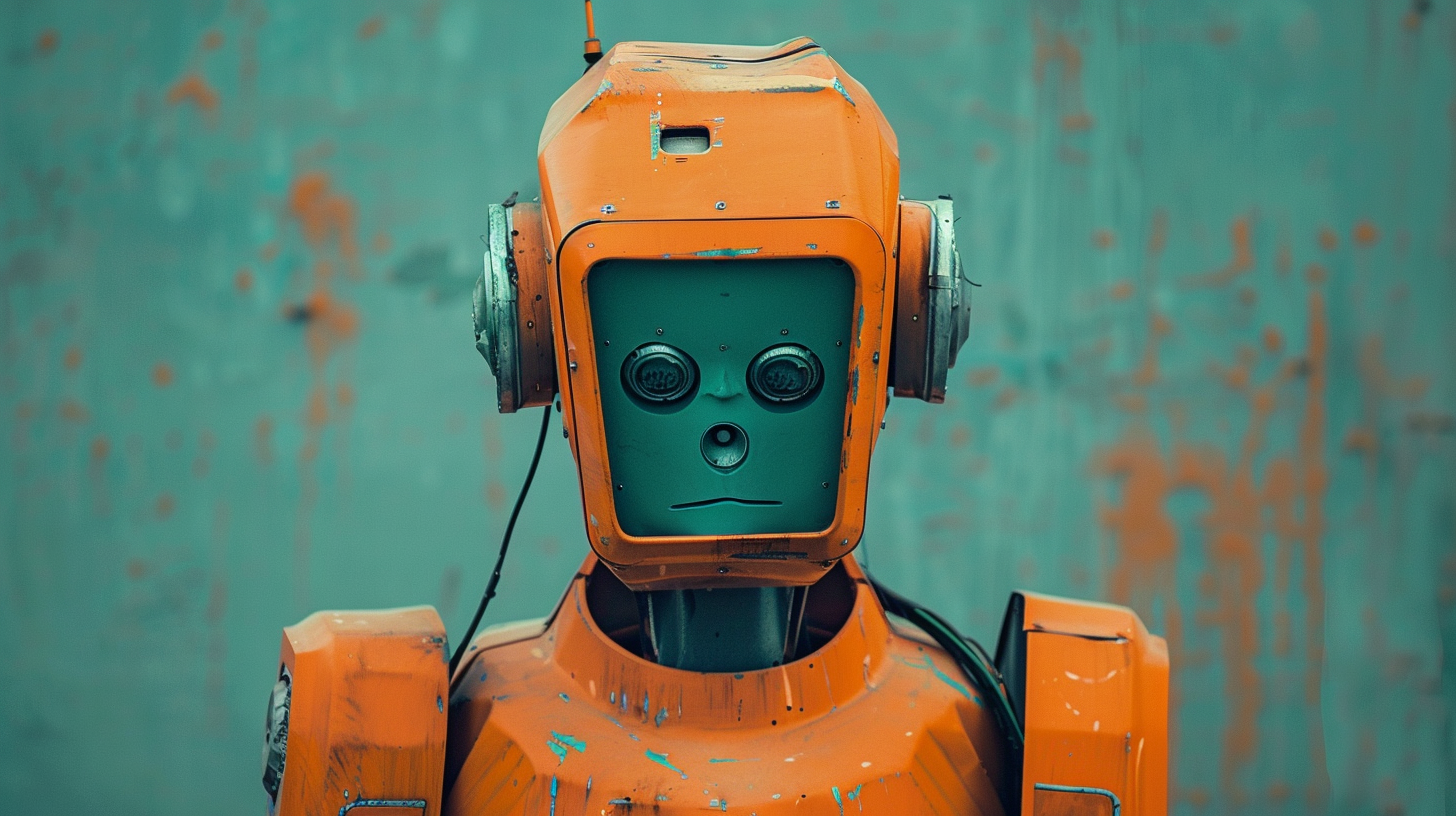
C · 04 · Co-workers
Robots
Bright painted bodies. Readable face or expression. Some wear and tear. Friendly, lived-in. Part of daily life, not sterile or menacing.
PaintedWornExpressive
Location canon
Planetary City is the heart. Everything else orbits it.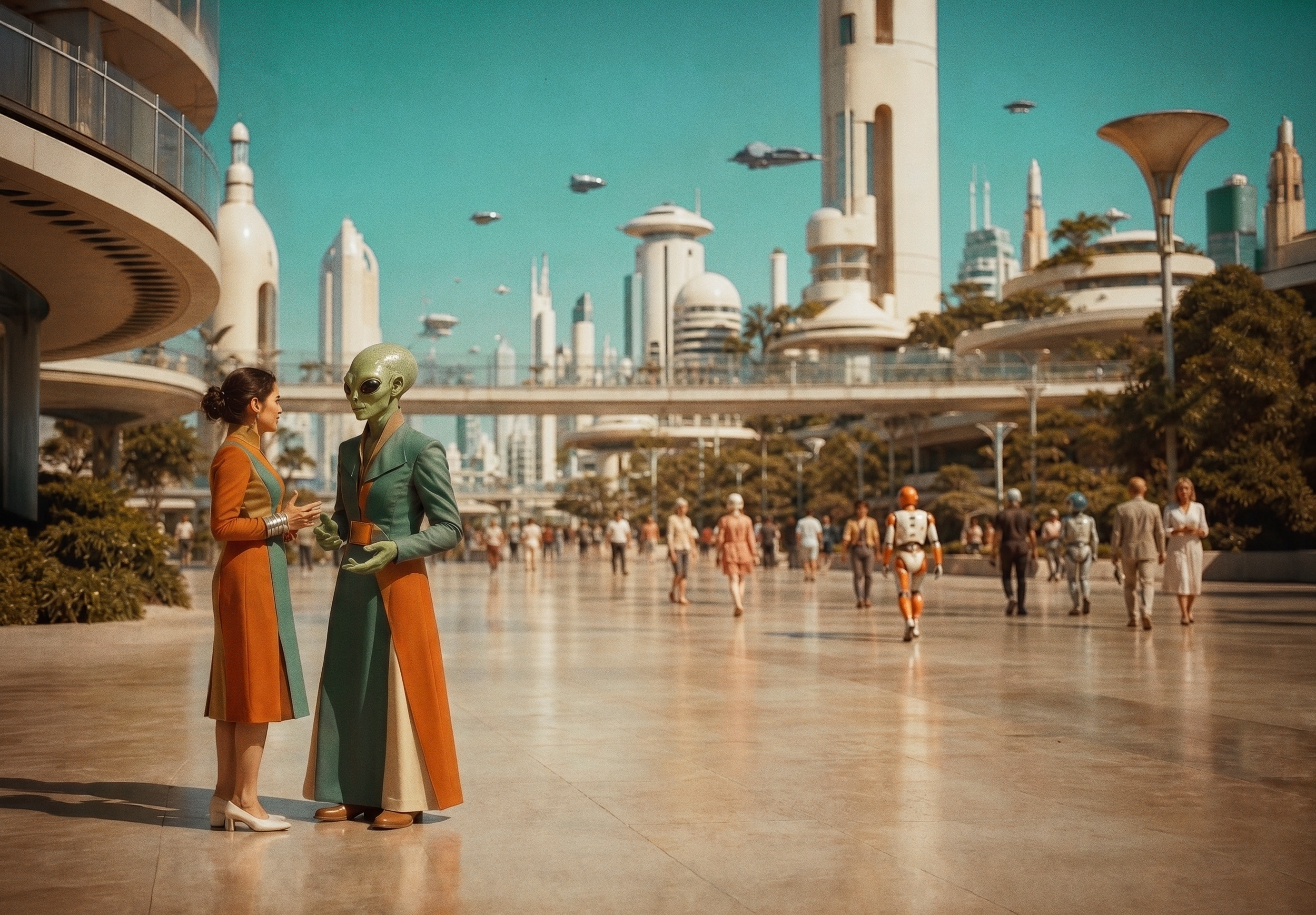
Loc · 01 · Earth
Planetary City
Bright, clean, sprawling, optimistic. White and cream mid-century towers, terraces, transit lines, flying cars. Humans, aliens, and robots, coexisting.
Loc · 02
The Moon
Nightlife and party hub. Black sky with stars, but bright with artificial light. Neon allowed here only.
Loc · 03
Mars
Bright orange-red, deep teal sky. Optimistic, never hostile.
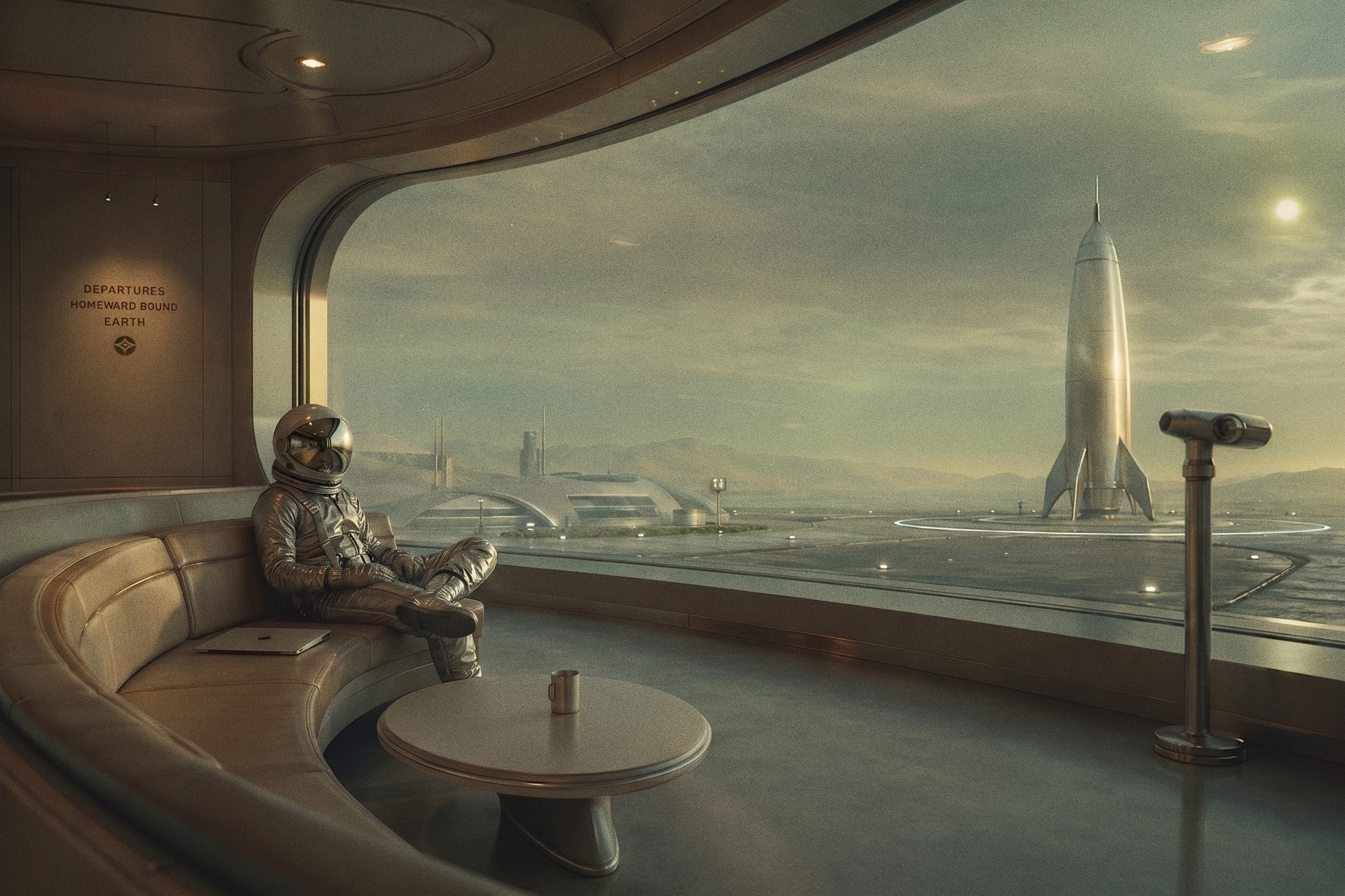
Loc · 04
Outposts
Diners, cafes, terminals, gas-station stopovers. Intimate, stylish, functional.
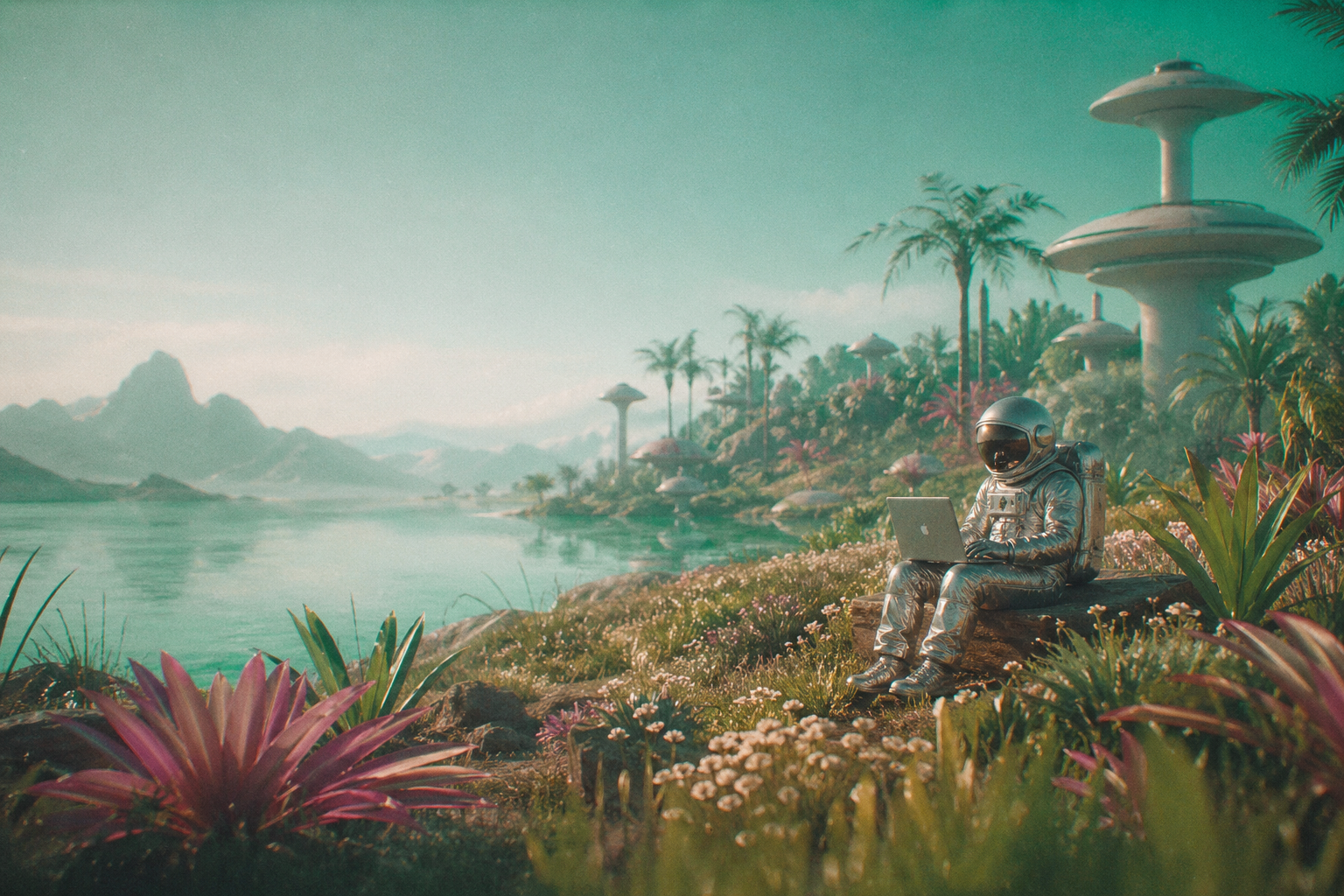
Loc · 05
Other planets
Habitable, colorful, surreal but never hostile. Reality-inspired, not fantasy chaos.
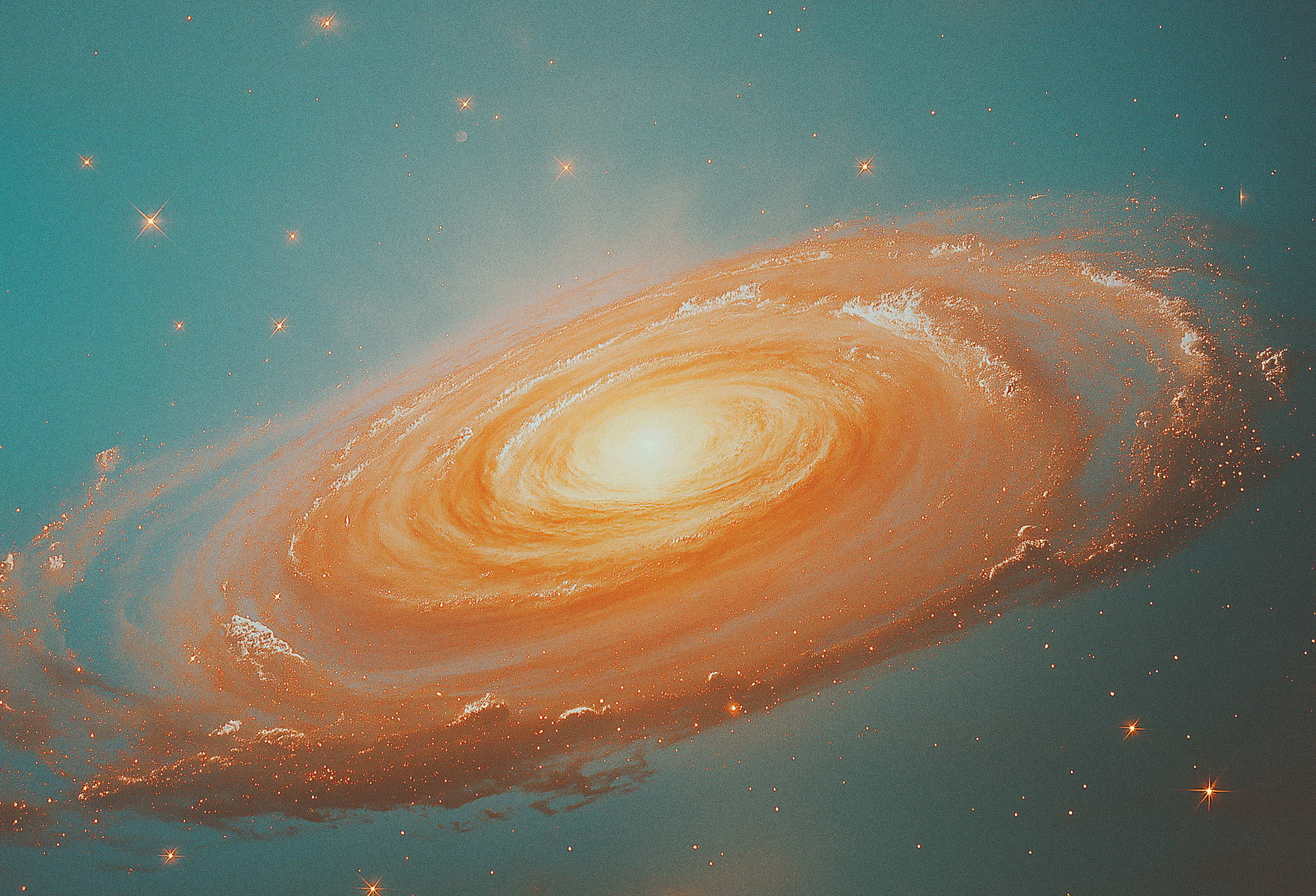
Loc · 06
Outer space
Deep black negative space. Restrained teal-orange events. Calm and cinematic, never overloaded.
Generating imagery
When an image must be made, anchor every prompt with these.Always include
- Reads as a real photograph
- 35mm Kodak film feel
- Visible grain, soft diffusion, lowered clarity
- Not CGI, not illustration, not concept art
- Bright, optimistic retro-futurism
- Orange-and-teal sensibility
- One clear subject, controlled composition
- Minimal clutter, generous negative space
Always avoid
- Cyberpunk and dystopian mood
- Overly busy backgrounds
- Generic sci-fi interface overload
- Harsh sharpness, plastic spacesuits
- Fantasy-style alien design
- Militarized or weapon-bearing visuals
- Text or signage unless deliberately required
- Anything that looks rendered, not captured
Hard rules
The short list that keeps imagery recognizably us.One subject, one read
Pick the emotional read first. Compose around it. Trim everything else.
Photographic, not rendered
35mm film feel. Grain, diffusion, lowered clarity. If it looks like a render, it failed.
Bright over moody
The world is luminous. Optimism is the default. Even quiet scenes feel hopeful.
Humans are the heroes
Aliens and robots are citizens, not the focus. The story is human-first.
No flat illustration or vector art
Imagery is photographic. Illustration belongs to other parts of the system.
No threat, no weapons, no us-vs-them
The universe has no enemy. No space marines. No invasions.
No clutter or visual noise
If the eye can't find the subject in half a second, the frame is doing too much.
No off-brand palettes by accident
Variations are deliberate. Otherwise: orange and teal.
Need the actual files? The full approved photography library lives in Downloads. Don't pull stills from anywhere else. If the shot you need doesn't exist yet, brief it through creative@planetarytalent.com rather than substituting off-brand imagery.